Seven Quiet Rooms Every Creative Eventually Walks Into
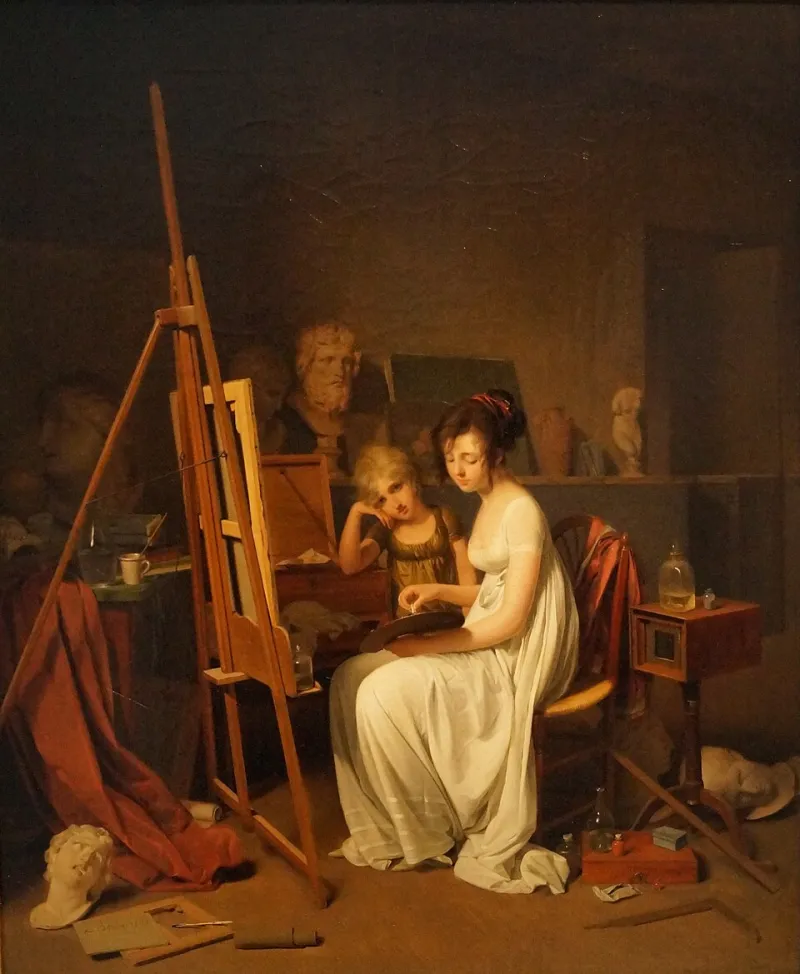
Photo: Louis-Léopold Boilly, Public domain, via Wikimedia Commons
There is a silence that has nothing to do with sound. It shows up in a bright studio at 10 a.m., in a crowded bar after an open mic, in a text thread with a collaborator, in the two days after a rejection email. It feels like a verdict. Usually it is closer to a weather report.
I have started thinking of these moments as rooms. You walk in, the door closes, and the air changes. You do not have to like the room. You do have to notice what it is telling you before you start rearranging the furniture.
Here are seven quiet rooms, and a practical way to read each one.
1. The room before the first mark
You are sitting in front of the blank page, the empty canvas, the timeline with no clips on it. Nothing is happening. The silence says: you are not ready. It says: you do not have it today. It says: who do you think you are?
Sometimes that is true. More often, the silence is just start-up noise. The first mark is expensive because it has to be a mark, and no mark can be all the marks. So lower the entry fee. Set a five-minute timer. Make an ugly shape in the corner. Write the worst possible first sentence and leave it there. The room before the first mark is not asking for brilliance. It is asking for motion.
Read it as information about resistance, not about talent.
2. The room after the post goes live
You hit publish. You refresh. You refresh again. The silence is loud, specific, and full of imaginary comments. This is the room where a lot of good work gets quietly abandoned, because the absence of immediate applause feels like proof that the thing was not good.
But an audience is not a vending machine. People are at work, at dinner, asleep, or scrolling past your post while thinking about a parking ticket. The silence after publishing is mostly information about timing and distribution, not about the work itself.
Practical move: give yourself a 48-hour rule. Do not check the numbers, the comments, or the likes for two days. Do the next small task instead. When you do look, look for patterns, not verdicts. One quiet post is not a referendum. A quiet week might be a signal about where you are showing up, not about what you made.
3. The room where you work alone
The studio silence is different. It is not empty. It has a texture. Some days it feels like company. Some days it feels like a holding cell.
When the alone-room gets heavy, ask a boring question: what part of this feels like pushing, and what part feels like following? Silence in solo work often shows up when you have been forcing a decision that your hands have not caught up to yet. Or when you have been staring at the same corner of the piece for too long.
Try changing the room before you change the work. Open a window. Put on a record with no lyrics. Move to the kitchen table. Take a walk around the block without your phone. The silence is telling you something about pace. Sometimes the answer is more input. Sometimes it is rest. Rarely is it more self-criticism.
4. The room that does not laugh
You tell the joke, show the rough cut, read the pages, and the room stays flat. Not hostile. Just still. This is one of the most useful silences you will ever get, and one of the least pleasant.
A flat room can mean the material is not working. It can also mean the room is wrong, the timing is off, or the piece needs a beat that you have not built yet. The mistake is to rewrite everything from one cold reading. The other mistake is to decide the audience is stupid.
Practical move: watch for micro-reactions. Where did people lean in? Where did they look at their phones? What did they repeat back to you afterward, even if it was not the part you expected? Ask one neutral question instead of fishing for praise: what stayed with you? Then listen. The room that does not laugh is often telling you where the work is still asking permission instead of taking a risk.
5. The room between collaborators
You throw out an idea. Your collaborator says nothing. The silence stretches. You start explaining. They start nodding. Nobody is actually talking about the thing that just happened.
Silence between collaborators is usually about unspoken assumptions. One of you thinks you are deciding on a direction. The other thinks you are brainstorming. One of you is protecting the vision. The other is trying to be polite.
Name it. Not dramatically. Just: I notice we went quiet. What are we actually trying to make here? Then use a round-robin or written notes so the loudest person in the room does not become the default editor. The silence is not a sign that the partnership is doomed. It is a sign that the partnership needs a translation layer.
6. The room after a rejection
The email is short. Thanks, but no. You close the laptop. The room is very quiet. This silence loves to dress up as a diagnosis: you are not good, this was a waste, you should have known.
A rejection is a decision about fit. It is not a full review of your worth. The silence after it is a buffer zone. Use it. Wait 72 hours before you decide anything permanent. Then extract one useful note, if there is one. If there is not, let it go. Send the next thing. The room after rejection is not asking you to disappear. It is asking you to separate the decision from the diagnosis.
7. The room after the project ends
You deliver the files. The show comes down. The book is printed. The song is out. And then the weird part: nothing. The thing that organized your days is gone. The silence here is a transition, not a punishment.
Have a closing ritual. Write one page about what the project cost and what it gave you. Clean one surface. Tell one person it is done. Then rest before you start the next thing, even if rest makes you feel lazy. The room after the project ends is telling you that you have changed. You do not get to skip the part where you notice.
Silence is data with bad manners
None of these rooms are comfortable. That is not the point. The point is that silence is not one thing. It is a set of signals about timing, fit, energy, and the gap between what you hoped would happen and what is actually happening. You do not have to obey it. You can interview it. Ask what it knows. Then make the next small move.