The Audience Is Watching — And That Might Be Ruining Your Work
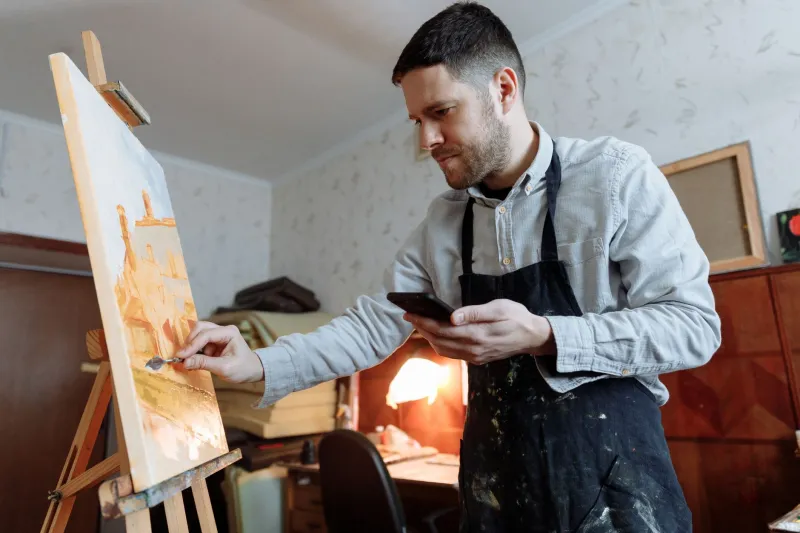
At some point in the last decade, "building in public" went from being a quirky transparency experiment to something closer to a professional expectation. Show your sketches. Post your drafts. Document the process. Let people in.
And look — there are real benefits to that approach. Audiences connect with process. Showing the behind-the-scenes builds trust and relatability in a way that polished final work sometimes can't. If you're trying to grow an audience, visibility matters.
But I've been thinking a lot lately about what we give up when we turn the camera on before the work is actually done. About the specific kind of thinking that only happens when nobody's watching. And about whether the pressure to document everything might be subtly — or not so subtly — corrupting the creative act itself.
The Performance Problem
Here's the thing about sharing your process publicly: the moment you know someone's watching, you start performing. Maybe only a little. Maybe you don't even notice it happening. But you do.
You choose the more photogenic workspace. You caption the sketch in a way that sounds intentional even when you were just messing around. You frame the struggle as a narrative — "hitting a wall but pushing through" — rather than sitting inside it long enough to actually figure out what the wall is made of.
This isn't vanity. It's just how human beings work. We're social creatures. We adjust our behavior in response to an audience. That's not a character flaw; it's biology. But in a creative context, that adjustment has real costs.
The roughest, most generative part of making anything is the part that looks like nothing. The wandering. The bad ideas you entertain seriously for a while before discarding them. The work that goes in a direction you later reverse. None of that photographs well. None of it makes for a compelling Story or Reel. So either you don't share it — which means you're already curating your process — or you perform it, which means it's no longer quite real.
What Private Space Actually Gives You
I want to make a distinction here between privacy and secrecy. Working privately doesn't mean hiding. It means giving yourself a protected zone where the work doesn't have to be legible to anyone else yet.
In that zone, a few things become possible that are genuinely harder when you're building in public:
You can fail experimentally. When no one's watching, a bad idea is just a bad idea — not content, not a public misstep, not something you have to narrativize. You can try something, watch it collapse, and move on without it becoming part of your public record.
You can follow weird threads. Some of the most interesting creative discoveries come from following an instinct that has no obvious justification yet. When you're documenting in real time, there's pressure to explain your choices as you make them. But sometimes you don't know why you're doing something until much later — and the explanation you construct on the fly is a lie that might steer you wrong.
You can change your mind without it being a thing. Pivoting mid-project when no one knows the original direction is just part of the process. Pivoting publicly can feel like a betrayal of your audience's expectations, or at minimum requires its own explanation. That friction — however minor — nudges you toward finishing what you started even when you shouldn't.
The Sunk Cost of Sharing Too Early
There's a specific trap that a lot of creators fall into: they share a project early, get a positive response, and then feel locked into that version of the project even when their instincts are pulling them somewhere different.
The audience liked the first direction. They're invested. Changing course now feels like letting them down. So the creator keeps going — not because the work demands it, but because the audience expects it.
This is a real thing. I've seen it happen, and I've felt it myself. The early share creates a kind of obligation that didn't exist before. And that obligation, however invisible, shapes what the work becomes.
Sharing later — after the core decisions are made, after the thing has found its own shape — protects you from that. You're not asking for input on the architecture while you're still pouring the foundation.
When Going Public Actually Makes Sense
None of this is an argument for working in complete isolation forever. There are genuinely good reasons to share process, and good moments to do it.
Sharing works well when the work is far enough along that outside input can refine rather than redirect. When you're looking for accountability to help you push through a specific sticking point. When the process itself is the point — when the documentation is the art, not a byproduct of it.
It also works well when you're clear-eyed about what you're doing. If you know you're performing your process, and you're doing it deliberately as part of how you connect with an audience, that's a choice you can make consciously. The problem is when the performance becomes invisible to you — when you've been doing it so long you can't tell the difference between your real process and the curated version of it.
Protecting the Quiet
The most practically useful thing I can offer here isn't a framework or a content strategy. It's simpler than that: keep something back.
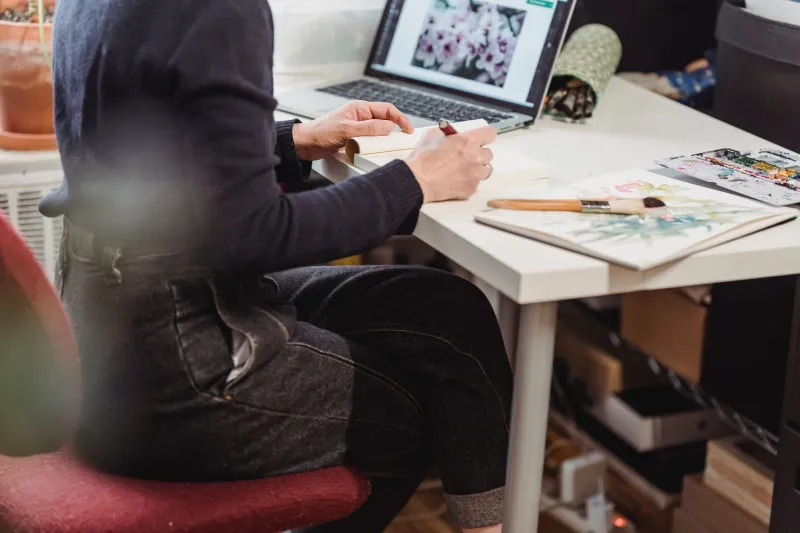
Not everything. Not forever. Just some portion of your creative life that belongs only to you, at least for a while. A project you don't mention online. A sketchbook you don't photograph. A draft that doesn't go to anyone until it's ready.
That quiet space is where a lot of the real work actually happens. The messy, non-linear, impossible-to-caption work that eventually becomes the thing you're proud of.
The audience doesn't need to see all of it. And honestly? Your work will probably be better if they don't.