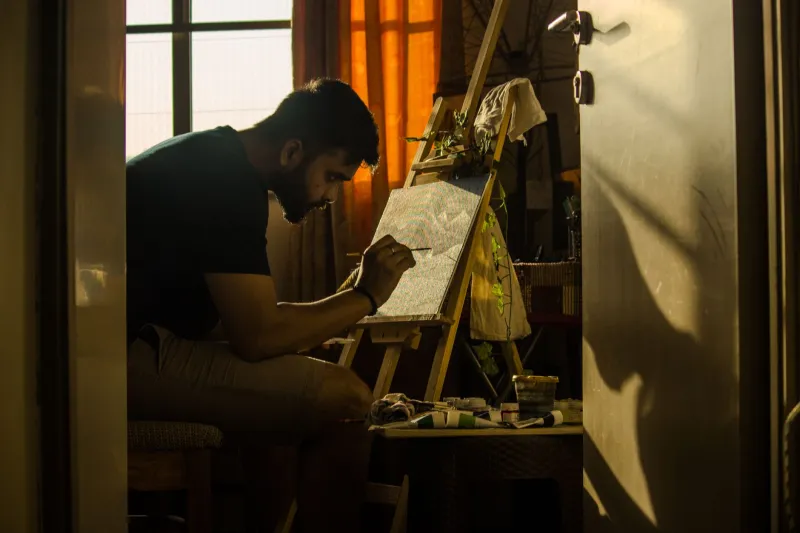
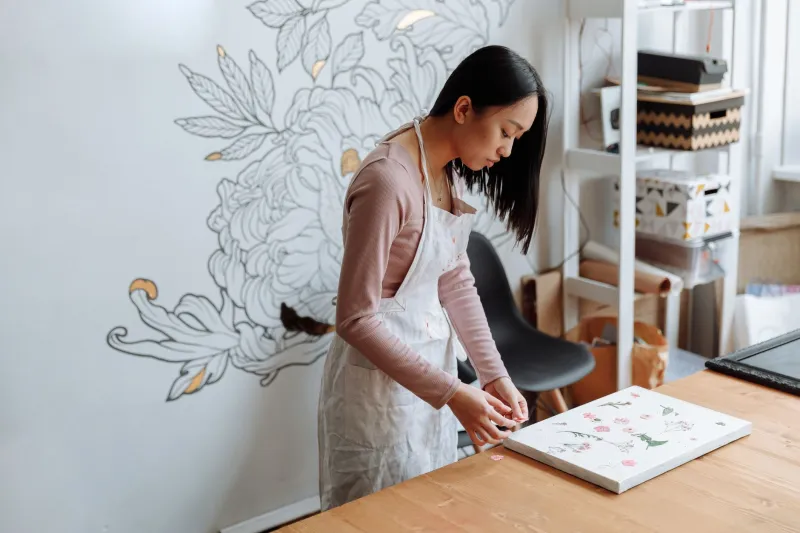
Nobody's Watching Yet — And That's the Best Thing That Could Happen to You
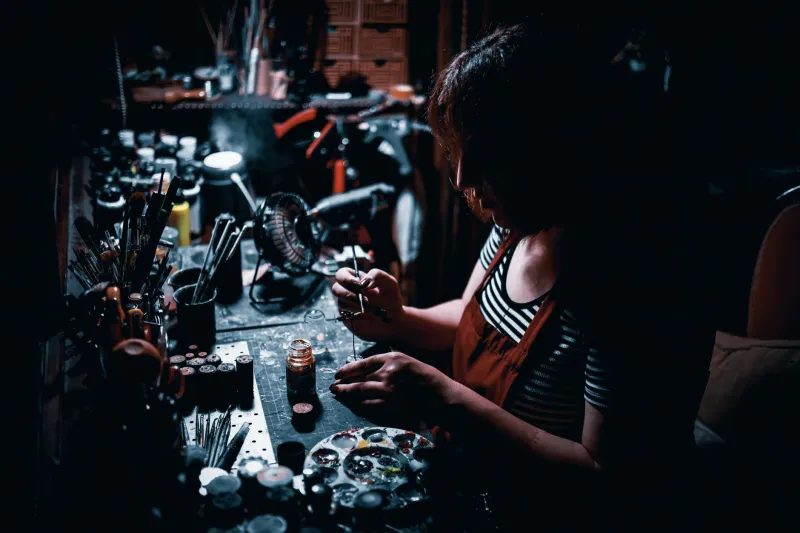
Here's something nobody really talks about in the age of build-your-audience-first content advice: the years before anyone cared about your work might be the most important years of your creative life.
Not because struggle is noble. Not because suffering builds character. But because obscurity gives you something that attention will eventually take away — the freedom to make weird, honest, uncommercial choices without consequence.
When nobody's watching, you don't have to perform. And that changes everything.
The Imaginary Audience Problem
Even before most of us have a real audience, we invent one. We post something and immediately picture who's going to read it, how they'll react, whether they'll share it. We write a sentence and hear the comments before they exist. We make creative decisions based on feedback we haven't received yet from people who haven't found us yet.
This is the imaginary audience — and it's sneaky, because it feels like ambition. It feels like you're thinking ahead, being strategic, staying sharp. But what it's actually doing is editing your instincts before they have a chance to breathe.
The imaginary audience is rarely more adventurous than you are. It's usually a composite of your most critical coworkers, your most skeptical family members, and whoever made you feel dumb the last time you tried something new. It has terrible taste and enormous influence over your work, and it doesn't even exist.
True obscurity — genuine, early, nobody-has-found-you-yet obscurity — is one of the few conditions that can quiet that voice. When there's no audience to perform for, real or imagined, you start making choices for different reasons.
What Gets Made in the Dark
Think about the artists and creators you love most. Not the ones who are technically impressive. The ones who feel specific — whose work has a texture you can't quite pin down, a voice that sounds like it couldn't have come from anyone else.
Chances are, that specificity was built in private.
There's a reason so many musicians talk about their pre-label years as formative in ways their later, more successful work never matched. A reason writers who spent a decade making zines nobody read often produce the most distinctive prose once they break through. A reason some of the most inventive visual artists working today spent years making things for an audience of approximately zero.
When you're making work in genuine obscurity, you're not building a brand. You're building a sensibility. You're figuring out what you actually think, what you actually care about, what you find funny or moving or worth the effort. You're accumulating a creative vocabulary that belongs entirely to you, because you developed it without anyone telling you what was useful.
That's not nothing. That's the whole thing.
Attention Changes the Math
Once an audience shows up — even a small one, even just a few hundred people following along — the creative calculation shifts. Subtly at first, then less subtly. You start noticing which things land and which don't. You start feeling the pull toward more of what worked and away from what confused people. You start making content instead of making work, and the difference between those two things is enormous.
None of this is cynical. It's just human. We're social creatures. We respond to feedback. We want to connect. There's nothing wrong with wanting your work to reach people and mean something to them.
But if you never had the obscure years, if you went straight from first idea to audience-building mode, you're building on a foundation that was designed to please rather than to discover. And work built on that foundation tends to have a particular kind of hollowness — technically fine, maybe even quite good, but somehow interchangeable. You can feel the imaginary audience in every sentence, every frame, every choice.
Making Peace With the Unseen Period
If you're in the early, quiet, nobody-knows-about-this-yet phase of your creative life, I want to offer a reframe: you're not waiting to matter. You're in the most generative window you're ever going to get.
Use it like it's valuable, because it is.
Make the project that doesn't make sense commercially. Write the piece that has no obvious audience. Build the thing that sounds weird when you try to explain it at dinner. Follow every strange instinct to its conclusion without stopping to ask whether it's going to resonate. Let yourself be bad at things publicly, or better yet, privately, where there are no stakes and no record.
The work you make in this period probably won't be your best work in a technical sense. But it will be the most authentically yours, and that quality — that specific, hard-to-fake originality — is what will eventually make people feel like they've found something real when they discover you.
You Can't Go Back, But You Can Protect What's Left
If you already have an audience, this isn't a lament. You can't un-ring that bell, and you wouldn't want to. Attention is good. Connection is good. People caring about what you make is genuinely wonderful.
But you can still carve out pockets of creative privacy. Side projects that don't go on the main feed. Notebooks that don't become newsletters. Experiments that exist only for the purpose of existing, with no downstream content strategy attached.
Those pockets matter. They're where you stay in contact with the version of yourself that creates without performing — the one who got you here in the first place.
Because here's the thing: your audience, the real one, the people who actually connect with what you do? They fell for the work that came from that unperformed place. They can feel the difference, even if they can't name it.
Give them more of that. Give yourself more of that.
Nobody's watching yet is not a problem to solve. It's a condition to protect for as long as you possibly can.