What They Carry Home Is Not What You Packed

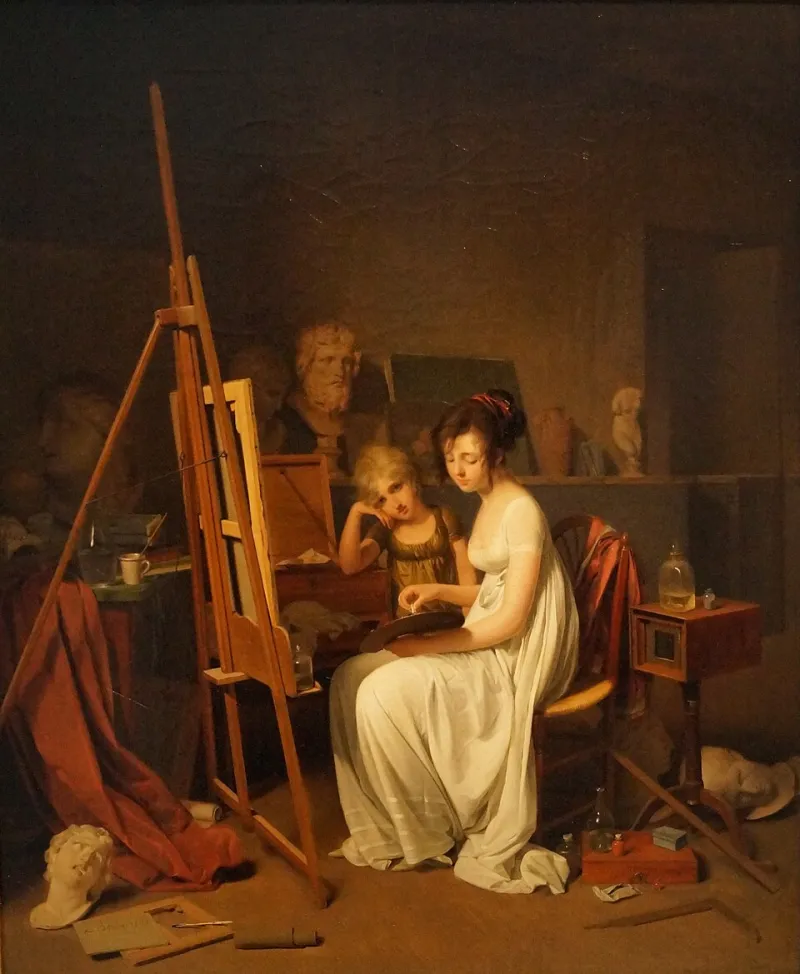
Photo: HonysTorresArt, CC BY-SA 4.0, via Wikimedia Commons
After a show, a screening, or a gallery opening, there is a particular kind of conversation that can either wreck you or teach you. Someone comes up to you, glowing, and says the thing they loved. It is not the thing you built the whole piece around. It is not the thing you stayed up late fixing. It is a detail you barely noticed you had made.
You smile. You say thank you. Inside, a small voice says: wait, did you see the rest of it?
This is the gap between what the creator thinks is the heart of a piece and what the audience actually carries away. It is not a flaw in the audience. It is not a flaw in the work. It is the ordinary math of meaning. And if you can get curious about it instead of defensive, it can make your work better.
The red chair problem
A painter I know spent months on the light in a small interior scene. She mixed and remixed the shadow under a table until it had the exact weight she wanted. The painting went into a group show in Santa Fe. Almost everyone who stopped to talk mentioned the same thing: the red chair in the corner. The chair was a prop. She had painted it in twenty minutes. She almost left it out.
That is the red chair problem. You build a piece around a feeling, a structure, a color relationship, a difficult transition. The audience walks in and finds their own door. Sometimes it is the smallest thing in the room. Sometimes it is the thing you were least sure about.
This does not mean the thing you loved was wasted. It means the piece is bigger than your intention. The red chair is doing work you did not assign it.
The long take and the side character
Film is full of this. A director spends weeks blocking a long, complicated take. The camera moves through a crowded house, catches three conversations, lands on a face. It is the centerpiece. It is the reason the scene exists. Then the movie comes out, and the line everyone quotes is from a side character who appears for ninety seconds and says something offhand.
At a festival in Austin, I watched a Q&A where the director kept getting questions about a minor character. You could see him recalibrating in real time. At first he looked a little wounded. Then he started laughing. By the end, he was telling stories about how that character had been almost cut. The audience had found a live wire he did not know was live.
That is not a failure of direction. It is evidence that performance, timing, and context are collaborative. The audience brings their own history to the frame. They are not reading the piece you made. They are reading the piece they are having with it.
The pause after the monologue
In theater, actors learn this fast. You can build a whole performance around a monologue. You work the breath, the build, the break. Then afterward, people tell you the thing that stayed with them was the pause before you spoke. Or the way you looked at the door. Or a gesture you did in rehearsal and forgot about.
A friend of mine did a show at a small theater in Minneapolis. She had a big speech in the second act. She rehearsed it for weeks. After closing night, a woman told her the moment she would remember was the way she folded a napkin in the first scene. My friend barely remembered doing it. It was a habit she had picked up from the character and never consciously placed.
The pause, the napkin, the side character, the red chair. These are not accidents exactly. They are the part of the work that escapes the plan. They are where the piece becomes porous enough for someone else to enter.
Why releasing control is not giving up
There is a fear that if you stop controlling meaning, the work will become vague or sloppy. That is not what this is. You still need intention. You still need craft. You still need to make decisions and commit to them. The part you love most is what gets you through the long middle of the project. It is your engine.
But the engine is not the destination. Once the work is out in the world, meaning gets made in the space between the piece and the person receiving it. You can stand at the door and try to hand everyone a pamphlet explaining what they should feel. Or you can let them wander.
Releasing control does not dilute the work. It lets the work breathe. It also keeps you honest. If you only make work that can be fully explained by your intention, you are making a closed system. Closed systems are safe. They are also boring.
Listening for the part that lands
So how do you listen without turning your work into a focus group? Start with open questions. After a show, ask: what stayed with you? Not: did you get the ending? Watch where people lean in. Notice what they quote back to you. Read reviews for repeated nouns, not for verdicts. Keep a small log of the things people mention that you did not expect.
Do not change your work every time someone has a reaction. That is just chasing. But patterns matter. If three people in a row mention the same small moment, that moment is doing something. Ask yourself what it is doing. Is it giving the audience a way into the emotional center? Is it a relief from the tension? Is it a clue you accidentally left?
You can use that information in the next piece without making the next piece about the information. That is the difference between listening and polling.
Keep your private heart
Here is the part I keep coming back to: you still need the thing you love. You need the red chair to be a prop you painted in twenty minutes. You need the long take to be the reason you got out of bed. You need the monologue to be the thing you rehearsed until your voice gave out. The private heart is what makes the piece specific. It is not a receipt you hand to the audience.
The audience will carry something home. You cannot pack it for them. But you can build a piece with enough doors that they find their own way in. And when they tell you what they found, you can be curious instead of wounded. You can say: oh, that is what was in there for you. Then you can go back to the studio and make the next thing, carrying both your intention and their discovery.