Winning Feels Wrong: The Strange Guilt of Getting the Recognition You Wanted

There's a moment — and if you've been making things long enough, you've probably had it — where something you created catches fire in a way you didn't plan for. Maybe a piece you dashed off in an afternoon gets shared around. Maybe a project you were half-embarrassed to post gets more responses than anything you've spent months on. And instead of feeling great about it, you feel something closer to dread.
Welcome to one of the weirder corners of the creative life: the impostor syndrome that doesn't show up before success, but because of it.
The Myth of the Confidence Milestone
Most people assume that recognition fixes the internal stuff. You get the response, the comments, the followers, the sales — and then you feel like you belong. That's the deal, right? Work hard, earn your place, feel it.
Except it doesn't really work like that.
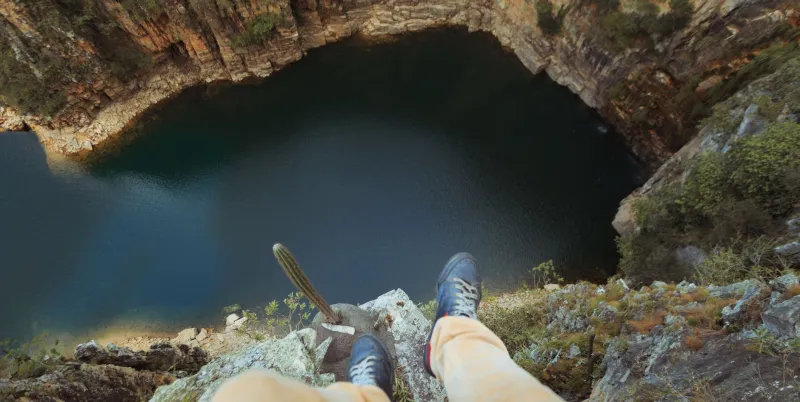
For a lot of creators, external validation doesn't quiet the inner critic. It amplifies it. Because now there are actual stakes. People are watching. They have expectations. And suddenly the gap between who you feel like on the inside — uncertain, still figuring it out, winging it more than you'd admit — and who the audience seems to think you are feels like a canyon you could fall into.
Psychologists have a name for this, obviously. Impostor syndrome is well-documented. But the flavor that comes with success is its own specific beast. It's not just I don't belong here. It's I got here by accident, and now everyone's going to figure that out.
Why Success Makes the Doubt Louder
Here's the thing about making creative work in relative obscurity: the stakes are low. You can experiment, stumble, pivot, post something weird on a Tuesday and forget about it by Thursday. There's a freedom in not being watched.
The moment an audience shows up, that freedom gets complicated. You start editing yourself differently — not just the work, but your relationship to the work. You wonder if the thing that resonated was a fluke. You wonder if you can do it again. You wonder, maybe most painfully, whether the people responding are responding to you or to some version of you that you accidentally projected and can't quite locate anymore.
This is especially true when success arrives before you feel ready. And here's the dirty secret: almost no one feels ready. Readiness is mostly a story we tell ourselves retroactively, once the fear has settled into something more manageable.
The Comparison Trap Gets Worse, Not Better
Another thing nobody warns you about: gaining an audience often means gaining a much bigger window into what everyone else is doing. You're suddenly more plugged in, more visible in creative communities, more aware of the range and quality of work out there. And comparison — which was probably already a problem — gets turbocharged.
You start measuring yourself against people who've been at this longer, with more resources, more collaborators, more of everything. And because you're now in the room, so to speak, the measuring feels more relevant. More urgent. More likely to expose you.
This is a trap. Not a metaphorical one — a literal cognitive distortion that will eat your creative energy if you let it.
What Actually Helps
So what do you do with all of this? A few things that have actually made a difference, at least from where I sit.
Separate the work from the reception. What you made is one thing. How people responded to it is another. Those two things are related but not the same. The work existed before the audience found it, and it'll exist after the buzz fades. Grounding yourself in the actual process — what you were trying to do, what choices you made, why — is more stabilizing than trying to understand or manage the reception.
Let yourself not know why it worked. This one's uncomfortable, but it's honest. Sometimes things land for reasons that are partially outside your control. Timing, cultural moment, algorithm, luck. Accepting that doesn't diminish your work — it just means you're operating in a complex system, like every other creator. You don't have to have a complete theory of your own success to keep going.
Talk to other creators, not just fans. Fans are wonderful, but they're responding to the finished thing. Other creators know the mess behind it. Having conversations with people who are also in the middle of their own uncertain, unfinished process is a reminder that nobody has it fully figured out. The confidence you're projecting onto others is probably as constructed as the confidence they're projecting onto you.
Make the next thing before you're ready. This is the most important one. The antidote to feeling like a fraud is not waiting until you feel legitimate. It's making something new while the doubt is still loud, and watching it not kill you. Repeat until the gap between the internal and external starts to close — not because the doubt disappears, but because you've proven to yourself, over and over, that you can work through it.
The Space Between Who You Are and Who They Think You Are
There's always going to be some distance between how you experience your own work and how an audience receives it. That's not a bug — it's kind of the whole point of making things for other people. Art lives in the space between the maker and the audience, and that space is never perfectly transparent.
The goal isn't to eliminate the gap. It's to stop being terrified by it.
You made something real. People responded to it. That's not a mistake. That's not a con. That's just what happens when the work finds the people it was meant for — even if you weren't entirely sure you were ready to let it go.