The Work That Flopped Taught Me More Than Anything That Worked
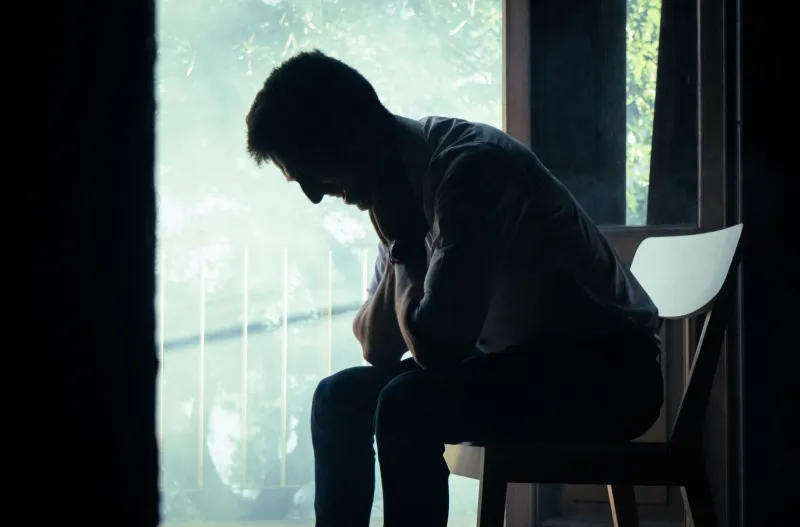
Nobody Posts the Flops
Scroll through any creative person's feed and you'll find a pretty consistent narrative: growth, momentum, breakthrough, recognition. The work gets better. The audience grows. The story moves forward.
What you won't find, at least not very often, is the project that fell flat. The pitch that got rejected twice and then ignored a third time. The piece you were genuinely proud of that got twelve likes, three of which were from your mom. The short film that played to an audience of six at a festival and generated one piece of feedback: "interesting."
Those stories exist. They exist for everyone. We've just collectively agreed not to tell them out loud, which is a shame—because that's where most of the actual learning happens.
Failure Has a Bad PR Problem
We've all heard the motivational version of creative failure. "Fail forward." "Every no gets you closer to yes." It's not that these things are wrong exactly. It's that they treat failure as a speed bump on the way to success, something to acknowledge briefly and then move past as quickly as possible.
That framing misses the point. Failure isn't a detour. It's material.
The projects that don't work—the ones that miss their audience, misfire tonally, collapse under their own ambition, or simply never find their moment—contain some of the most specific, honest information you'll ever get about your own creative instincts. But only if you actually look at them instead of just moving on.
What "Didn't Land" Is Actually Telling You
There are different kinds of creative failure, and they're not all saying the same thing.
Execution failure is when the idea was solid but the craft wasn't there yet. This is actually the easiest kind to work with. It means you saw something true but didn't yet have the technical vocabulary to express it. Go back. The idea is still good. You're just better now.
Audience mismatch is when the work was right but the context was wrong. Wrong platform, wrong timing, wrong framing. This one's sneaky because it can feel like failure when it's really a distribution problem. A lot of genuinely good work never finds its people because it got launched into the wrong room.
Concept failure is the hardest to sit with. This is when the idea itself didn't hold up—when you thought you had something and it turned out you didn't, or you were making something for reasons that had more to do with what you wanted to be perceived as than what you actually had to say. This kind of failure is the most uncomfortable and also the most useful, because it asks you to be honest about your own motivations.
Knowing which kind of failure you're dealing with changes what you do next.
The Case for Going Public With It
Here's a slightly uncomfortable argument: there's something valuable about being willing to talk about your failures in public, not as a performance of humility, but as a genuine creative act.
When a creator publicly wrestles with why something didn't work—not in a self-flagellating way, but in a curious, analytical way—it does a few things. It builds trust. It models the actual creative process rather than the highlight reel. And it usually surfaces something true that the polished success narrative would have buried.
Some of the most useful creative writing I've ever read was a filmmaker dissecting why their second feature failed to connect, or a novelist explaining in detail how a book they spent four years on just didn't work and what they think went wrong. That kind of honesty is rare. It's also far more instructive than another essay about how persistence pays off.
You don't have to broadcast every stumble. But the instinct to hide failure entirely—to only show the finished, successful version of yourself—costs you something. It costs you the texture that makes your story believable.
A Few Ways to Actually Mine Your Failures
If you've got a graveyard of abandoned projects or work that quietly underperformed, here are some ways to actually use it:
Do a post-mortem at least six months out. You need distance. Right after a failure, you're either too defensive or too harsh. Six months later, you can usually look at it more clearly. Ask: What did I think this was? What was it actually? What was I trying to prove?
Look for the thing you were afraid to make. A lot of creative failures are failures of nerve—the project that was almost honest, almost risky, almost personal. What would it look like if you made the version you were scared to make?
Separate the idea from the execution. Write down the core idea of the failed project in one sentence. Is the idea still interesting? Sometimes the answer is yes, and the failure was just that you weren't ready for it yet.
Track your patterns. If you look at three or four failures in a row, you'll usually find a thread. Maybe you consistently overexplain. Maybe you abandon things right before the hard part. Maybe your beginnings are strong and your middles fall apart. Patterns are information.
The Work Behind the Work
The creative archive that actually shapes you isn't just the hits. It's everything—the half-finished drafts, the projects you quietly retired, the things that worked for reasons you still don't fully understand, and the things that failed for reasons you're still figuring out.
All of it is the work. The stuff that lands is what you show people. But the stuff that doesn't land is what teaches you how to get there.
Don't be so quick to bury it.