Finished Is Overrated: What the Gaps in Great Art Actually Do to Us
Here's something that took me a long time to admit: some of my favorite pieces of art — music, comics, novels, paintings — were never finished. Not abandoned out of laziness or bad luck. Just... left open. And the more I sat with that, the more I realized the incompleteness wasn't a flaw I was forgiving. It was the whole point.
We're conditioned to treat "done" as the goal. Finish the draft. Ship the product. Close the loop. There's a whole productivity culture built around the dopamine hit of completion. But creative work doesn't always follow those rules, and some of the most resonant things ever made exist in a state of beautiful, intentional suspension.
The Myth of the Closed Door
Think about Schubert's "Unfinished Symphony." Two movements instead of four. By classical standards, it's a fragment. But it's also one of the most performed symphonies in the repertoire — not in spite of what's missing, but because of it. The absence creates a kind of emotional tension that a tidy resolution might have actually dissolved.
Or consider the novels of Franz Kafka — The Trial, The Castle — both unfinished, both published posthumously against his wishes. Kafka famously asked his friend Max Brod to burn his manuscripts. Brod didn't. And now those incomplete, structurally strange books are considered some of the defining literature of the 20th century. The unresolved quality of K.'s quest in The Castle isn't a problem the reader tolerates. It's the experience itself.
There's something happening in those gaps. When a story closes every door, hands you every answer, ties the bow perfectly — it completes the transaction and sends you home. But when something is left open, your imagination moves in. You become a collaborator. The work isn't done with you yet.
Why Audiences Do the Heavy Lifting (And Love It)
Psychologists have a term for this: the "Zeigarnik effect." Basically, our brains hold onto unresolved things more tenaciously than resolved ones. We keep returning to incomplete loops because closure is cognitively satisfying, and the absence of it keeps us engaged. Storytellers and artists have been exploiting this — consciously or not — forever.
But there's a deeper layer here than just psychological mechanics. When a piece of art invites interpretation rather than delivering conclusion, it creates genuine intimacy between the work and the audience. You're not a passive receiver anymore. You're a participant. And that participation creates ownership — the sense that this story, this painting, this half-finished song, belongs a little bit to you.
That's a powerful thing. And it's not something you can fake with a twist ending or a deliberately vague final chapter. The kind of incompleteness that resonates has to be honest. It has to come from a real place in the work.
The Margins Are Where the Truth Lives
I've spent a lot of time thinking about creative work that lives in the margins — the sketches, the B-sides, the rough cuts, the half-formed ideas that never made it to the main stage. And what I keep noticing is that those marginal things often carry something the finished work doesn't. A rawness. A sense of process. A visible hand.
When you see a painter's preliminary sketches alongside their finished canvas, the sketches almost always feel more alive. The searching quality is present. You can see the artist thinking in real time. The finished piece might be more technically accomplished, but the sketch lets you inside the creative mind in a way the polished work can't.
This is part of why behind-the-scenes content resonates so deeply in the creator economy right now. People don't just want the product — they want the process. They want to see the mess. The false starts. The thing that didn't quite work. Because that's where the humanity is.
The Deliberate Incompleteness
Some artists have figured this out and built it into their practice intentionally. The Japanese aesthetic concept of wabi-sabi — finding beauty in imperfection and impermanence — is one framework for this. Pottery with intentional cracks filled with gold. Gardens designed to change with the seasons. Architecture that acknowledges its own aging.
In American creative culture, we tend to sand everything down. Polish it. Make it Instagram-ready. But there's a growing counter-movement of creators who are deliberately leaving the edges rough. Who are releasing things before they're "done" — not because they ran out of time, but because they understand that the rough edge is part of the message.
Think about how certain lo-fi music movements, zine culture, or even the rougher corners of indie comics have always carried more emotional weight for their audiences than their slicker counterparts. The imperfection signals authenticity. It says: a human made this, and they didn't hide it.
What This Means for Your Own Work
I'm not suggesting you start releasing half-baked stuff and calling it philosophy. There's a difference between genuine creative ambiguity and just not finishing your homework. The incompleteness that resonates comes from a place of intention, even if that intention is simply knowing when to stop rather than when to finish.
But I do think it's worth asking yourself: are you completing things because they're actually done, or because completion feels safer than leaving something open to interpretation? Are you closing every door in your work because the story demands it — or because you're nervous about what readers might do with the space?
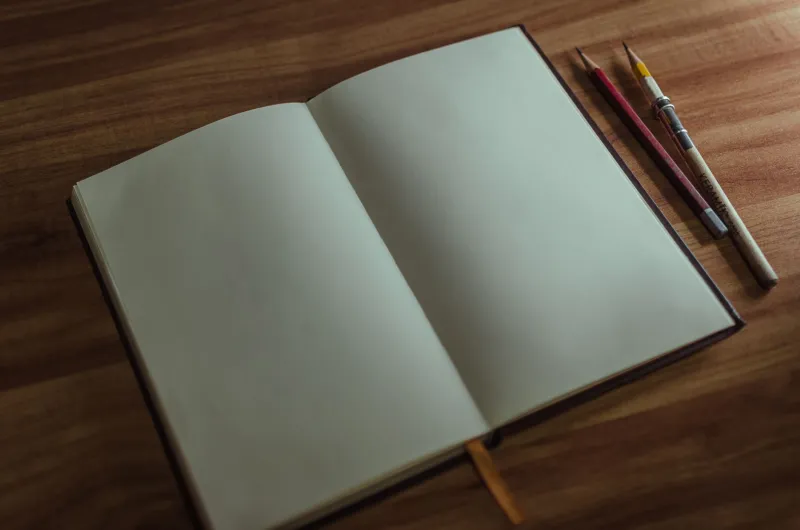
Some of your best work might be sitting in a notebook somewhere, half-formed, waiting. Not because it failed to become something bigger, but because it already is something. The fragment, the sketch, the unresolved scene — these aren't lesser versions of finished work. Sometimes they're the truest version of it.
Letting the Work Breathe
There's a kind of courage in leaving something incomplete. It means trusting your audience enough to let them finish it in their own heads. It means accepting that the story you started might become something different in someone else's hands — and being okay with that. Maybe even excited about it.
The most enduring creative work tends to be the kind that keeps giving. That rewards return visits. That means something different to you at 25 than it does at 40. And that quality — that openness — is almost never a product of perfect execution. It's a product of space. Of restraint. Of knowing that sometimes the most powerful thing you can do is not quite finish the sentence.
Leave a door open. See who walks through.