They Were Already There: How to Spot the People Who Actually Get Your Work
There's a particular kind of anxiety that comes with putting your work out into the world. You post something, watch the numbers, refresh the page, and then — if the numbers don't move the way you hoped — you start spiraling. Who's it for? Is anyone even paying attention? Should I be doing something completely different?
Here's the thing most creators don't talk about: the right people might already be there. You're just not looking for them.
The Metric Trap
We've been trained to measure attention in bulk. Follower counts, view totals, likes per post — all of it feeds this idea that audience building is basically a math problem. Get the numbers high enough, and success follows. But that framework quietly does something damaging: it flattens everyone who engages with your work into a single undifferentiated mass.
A hundred thousand passive scrollers and two hundred genuinely invested readers are not the same thing. One of those groups might make you feel significant on a dashboard. The other one actually shapes your creative life.
Vanity metrics are seductive because they're visible and easy to compare. But they tell you almost nothing about resonance — about whether your specific perspective, your particular way of seeing the world, is landing with anyone who actually needed it.
What Real Engagement Actually Looks Like
Real audience signals tend to be quieter than the algorithm rewards. They show up in the DM that starts with "I've never commented on anything before, but..." They're the person who references something you made six months ago like it's still living rent-free in their head. They're the reader who shares your work not because it's trending, but because they needed someone in their life to understand why it matters.
Those moments don't always look impressive in a spreadsheet. But they're the clearest possible evidence that your work is doing something real — that it's not just being consumed, it's being kept.
Pay attention to who comes back. Not who stumbles across something once and bounces, but who returns. Who follows the thread across different projects, different formats, different phases of your work. That pattern of return is one of the most honest signals you'll ever get about where your actual audience lives.
The Difference Between Audience and Crowd
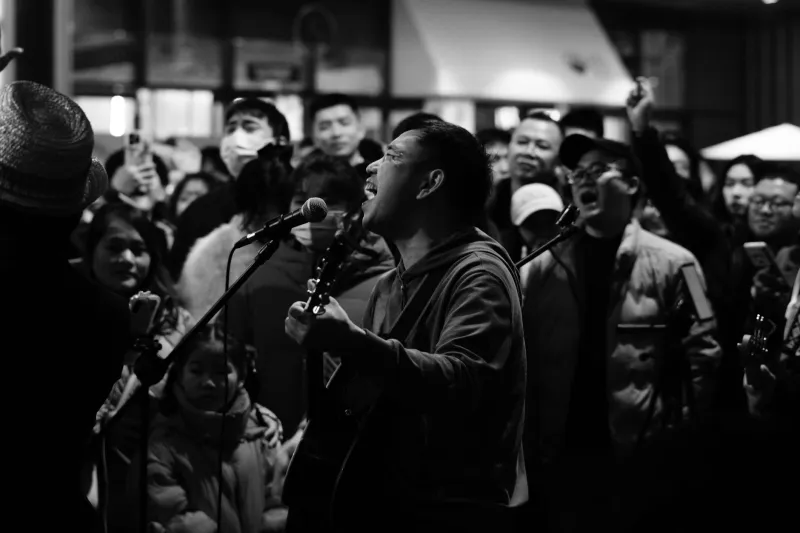
A crowd shows up for the moment. An audience shows up for you — or more precisely, for the perspective and sensibility you bring to your work. That distinction sounds small but it completely reframes how you think about making things.
When you're chasing a crowd, you're constantly adjusting. Trending sounds, popular formats, whatever's performing well this week. There's nothing wrong with understanding what's working in your space, but when the crowd becomes the target, you start optimizing for attention rather than meaning. And attention without meaning is exhausting to maintain — for you and, eventually, for the people watching.
When you're creating for an audience — even a small, specific one — the dynamic shifts. You're not performing at people. You're making something with them in mind, even if they're not in the room. That changes the quality of the work. It changes your relationship to the process. It changes what you're willing to say.
How to Actually Find Them
This isn't about abandoning growth. It's about getting smarter about what growth means for you specifically.
Start by going back through your past work and looking for the responses that surprised you — not the big numbers, but the unexpected ones. The piece you almost didn't post that got a response you didn't anticipate. The project that felt too personal or too niche that someone described back to you in a way that made you feel genuinely understood. Those moments are data. They're pointing somewhere.
Then get curious about who those people are. Not in a surveillance way, but in a genuine human way. What else are they into? What do they make or care about? Where do they spend their attention? The more clearly you can picture the person who finds your work meaningful, the more intentionally you can make work that deepens that connection.
And here's a practical shift that sounds simple but isn't: stop trying to reach everyone and start trying to reach someone specific. Not a demographic. A person — even a composite, imagined person who represents the sensibility you're speaking to. When you make something with that person in mind, the work gets more specific. And specificity, counterintuitively, tends to reach more people, not fewer.
Why This Changes How You Create
Knowing who you're actually making things for — really knowing it, not just hoping — removes a particular kind of creative paralysis. You stop second-guessing every decision based on what might perform well for the broadest possible audience. You start making calls based on what's true to the work and resonant for the people who already care.
That's not a small shift. It's the difference between making things to be seen and making things to be felt. Between building a platform and building a relationship. Between chasing noise and finding your signal.
The people who genuinely get your work are out there. Some of them have already found you and are waiting to see if you'll keep going. The best thing you can do for them — and honestly, for yourself — is to stop performing for the crowd long enough to notice they were there all along.
That's when the real work starts.