Version 2.0: How Your Biggest Creative Flops Are Actually Unfinished Business
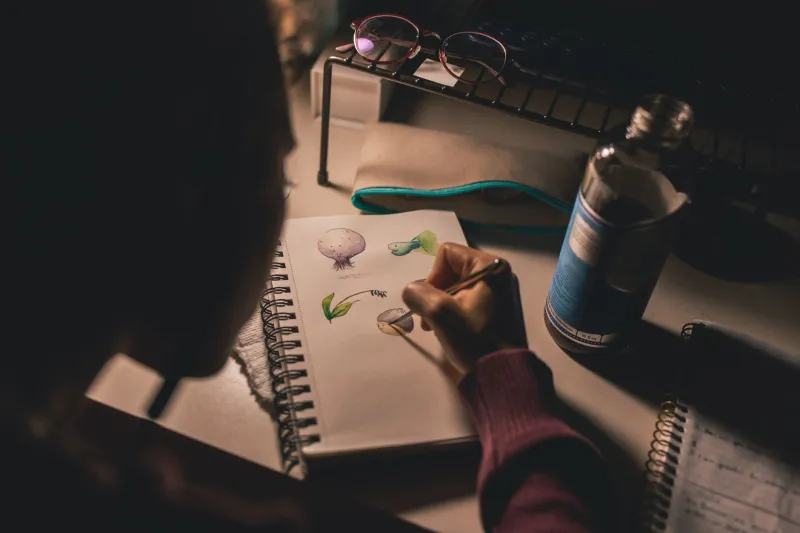
Somewhere in your files — maybe a folder buried three levels deep on your desktop, maybe a physical notebook shoved under the bed — there's a project you don't talk about. You worked hard on it. You believed in it. And then it just... didn't work. The audience didn't show up, the execution felt off, or the whole thing landed with a silence that was somehow louder than actual criticism.
Most creators do the same thing with that project: they close the folder and move on. New idea, fresh start, clean slate. Which is understandable. Starting over feels productive. Going back feels like defeat.
But here's the thing nobody really talks about — some of the most interesting creative breakthroughs aren't brand new ideas. They're old ones that finally found the right container.
The Sunk Cost Is Already Paid
When a project fails, you've already done something incredibly valuable: you've figured out what doesn't work. That's not nothing. That's actually a huge head start.
Think about it from a purely practical angle. You've already lived with the idea long enough to know its weak spots. You've already made the obvious mistakes. You've already had the argument with yourself about whether it's worth pursuing. The intellectual and emotional groundwork is done. What you're sitting on isn't a failure — it's a prototype.
Software developers have understood this forever. Version 1.0 ships broken. Version 2.0 is where the thing actually becomes useful. Creators tend to be harder on themselves, treating the first failed version like a verdict rather than a draft. But the gap between 1.0 and 2.0 is exactly where the real work happens.
What Usually Goes Wrong (And How That Tells You What to Fix)
Most creative projects fail for one of a handful of reasons, and each one points toward a specific kind of revision.
Wrong medium. You wrote it as a short story when it wanted to be a podcast. You made it a painting when it needed to move. The idea itself was solid, but the form fought against it. Translating a failed project into a different medium isn't abandoning the original — it's finally letting the idea breathe.
Wrong audience. You pitched it to people who weren't ready for it, or who simply weren't the right fit. A project that flopped with a general audience might be exactly what a specific niche has been waiting for. Same content, different framing, completely different result.
Wrong timing. Culture shifts constantly. Something that felt out of step three years ago might be precisely on-beat today. A lot of creators don't revisit old work because they assume the world is the same as when they first tried it. It's not.
Wrong perspective. You were too close to it. You were telling the story from the wrong angle, or centering the wrong character, or solving the wrong problem. Distance — real distance, like a year or two away from the project — can completely reframe what you were actually trying to say.
The Remix Isn't a Cop-Out
There's a weird stigma around revisiting old work. It can feel like you're cheating, or like you've run out of ideas, or like you're just recycling. Push past that feeling, because it's wrong.
Musicians do this constantly and nobody blinks. An acoustic version of an electric song isn't laziness — it's reinterpretation. A director's cut isn't an admission of failure — it's a different argument about what the movie wanted to be. Novelists revise for years. Painters paint over old canvases. The creative tradition is absolutely full of second attempts that became the definitive version.
Beyoncé's Lemonade drew from years of material she'd been sitting with. David Bowie reinvented the same core ideas across decades and different personas. Kendrick Lamar revisits themes from earlier albums and sharpens them into something that hits completely differently the second time around. The creative act of returning to something isn't regression — it can be the most sophisticated move you make.
How to Actually Do It Without Just Repeating the Same Mistakes
Revisiting a failed project only works if you come at it differently. Here's a loose framework that helps:
Give it real distance first. If you're still a little raw about the failure, you're not ready. You need enough time that you can look at the old work with genuine curiosity instead of defensiveness. Six months minimum. A year is better.
Identify the core idea, not the execution. Strip everything back. What was the actual thing you were trying to say or make or do? Write it down in one sentence. Then look at your old project and ask whether the execution actually served that idea — or got in the way of it.
Change at least one major variable. Medium, audience, format, perspective, tone — something has to shift. If you remake it exactly the same way, you'll get exactly the same result. The revision has to be genuinely different, not just polished.
Let the failure inform the new version without defining it. You're not making a corrected version of the old project. You're making something new that happens to share DNA with it. That's a different creative posture, and it matters.
The Archive Is a Resource, Not a Graveyard
One of the things I keep coming back to on this site — whether we're talking about sketchbooks, drafts, or dead-end experiments — is that the stuff that didn't make it isn't waste. It's material. Your archive of failures is actually one of the more honest documents of your creative life, and it's full of ideas that never got a fair shot.
The project that flopped in 2019 might be the project that defines your 2025. Not because you got lucky, but because you got smarter, or the culture caught up, or you finally figured out the right form for the idea you've been carrying around.
So before you start something completely from scratch, do yourself a favor. Open that buried folder. Flip through the old notebook. Look at the thing you abandoned and ask — not why did this fail, but what was this actually trying to become?
The answer might surprise you. And the work you make from it might surprise everyone else.